

Samantha Yem Urges Law-Based Dialogue as Cambodia and Thailand Continue Maritime Conciliation
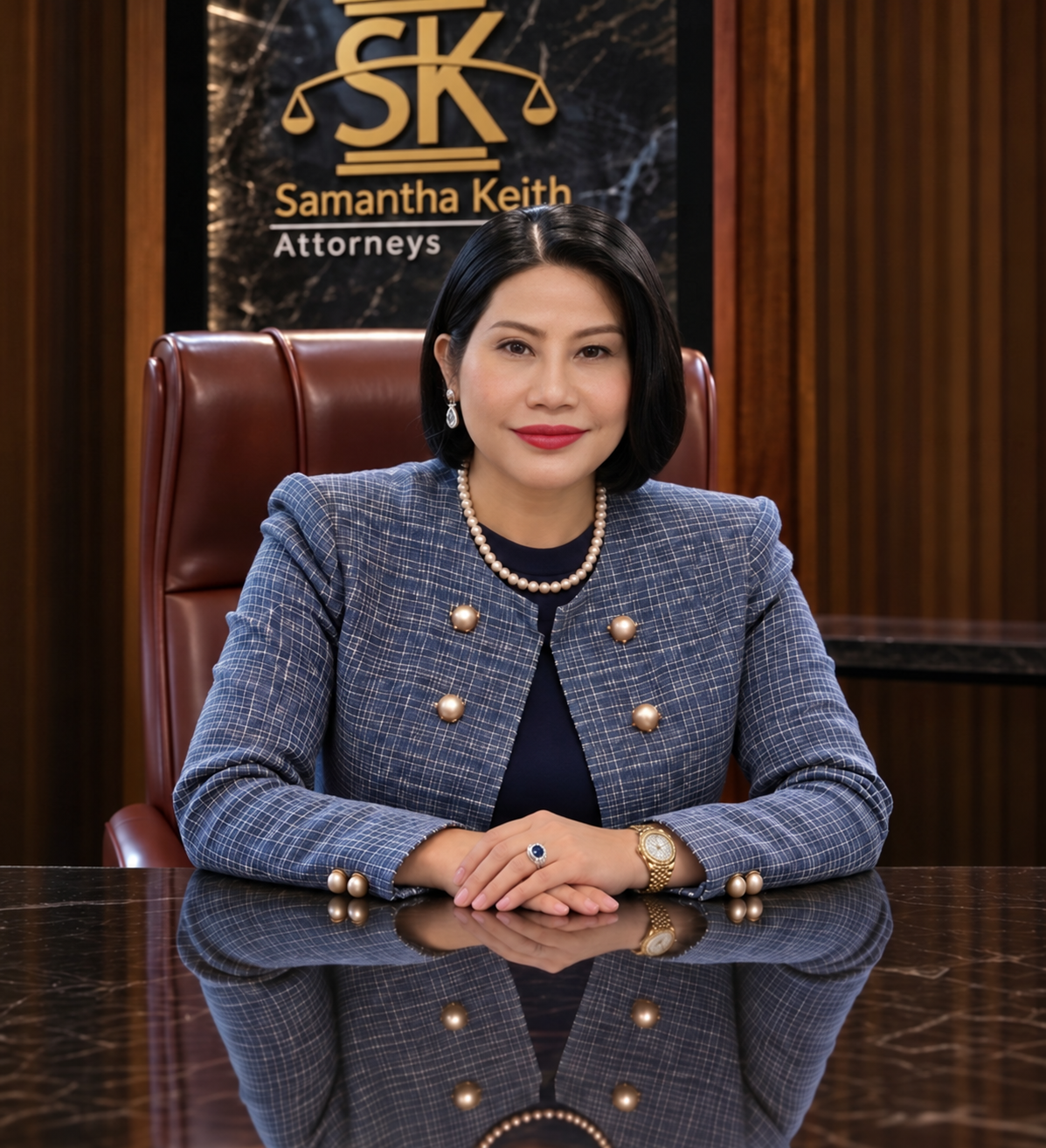
Samantha Yem
SK Law Office founder Samantha Yem highlights international law, regional stability and the importance of constructive negotiations under UNCLOS
PHNOM PENH, CAMBODIA, October 14, 2026 /EINPresswire.com/ -- As Cambodia and Thailand prepare for maritime conciliation meetings in The Hague, attorney Samantha Yem is urging both governments to prioritize international law, technical evidence and sustained dialogue in addressing their overlapping claims in the Gulf of Thailand.Yem, founder and managing partner of SK Law Office, said the proceedings under the United Nations Convention on the Law of the Sea (UNCLOS) offer an opportunity to manage a disagreement while protecting bilateral relations.
“Peaceful dispute resolution is not a concession by either Cambodia or Thailand. It is an exercise of responsible sovereignty by both,” Yem wrote in a legal commentary.
According to an Oct. 9 announcement by the Permanent Court of Arbitration, a five-member Conciliation Commission is scheduled to meet representatives of both governments Oct. 14–18 in The Hague, Netherlands. The court serves as registry for the process, providing support rather than deciding the maritime dispute.
Cambodia initiated compulsory conciliation June 2 under Article 298 and Annex V of UNCLOS. The proceedings concern the interpretation and application of maritime delimitation provisions and remain separate from land-border disagreements. The commission is not being asked to determine sovereignty over disputed land territory.
Representatives of both governments met the commission Sept. 14–16 in Singapore, where they adopted terms of appointment and procedural rules and delivered statements and presentations. Those exchanges established a framework for the commission’s review of both positions.
Unlike arbitration or judicial proceedings, compulsory conciliation does not produce an imposed, binding judgment. Conciliators evaluate facts and legal arguments, explore possible common ground and may recommend terms for an amicable settlement. Their eventual report can identify points of agreement and propose ways to address remaining differences.
Although the report itself is nonbinding, UNCLOS provides for subsequent negotiations based on its recommendations. Yem said that arrangement combines independent scrutiny with flexibility, allowing each government to maintain responsibility for any final agreement.
Neither side must accept a predetermined maritime boundary. Both can submit evidence, test arguments and explore arrangements within an international framework. That approach is important, Yem suggested, when national sovereignty and political sensitivities are involved.
Maritime delimitation involves more than drawing a boundary on a map. Coastal geography, navigation, fisheries, seabed resources and marine environmental protection may all influence negotiations. Any sustainable settlement could also require cooperative mechanisms for resource management, environmental safeguards and resolving future disagreements.
The consequences extend beyond government offices. Uncertainty over maritime claims can affect fishing communities, commercial planning, energy exploration and investment. Continued friction may also complicate relations between neighboring countries connected by trade, tourism and longstanding social ties.
As members of the Association of Southeast Asian Nations, Cambodia and Thailand share interests in regional stability and cooperation. Yem argued that defending national interests need not mean sacrificing diplomacy. A durable outcome should recognize the legitimate interests of affected communities on both sides.
She also warned against presenting conciliation as a contest in which one country must be publicly humiliated. Premature claims of victory can harden domestic expectations and make technically complex negotiations more difficult. Restraint, by contrast, can give experts and negotiators room to work.
“Cambodia’s strongest message will not come from declaring victory before the process is complete. It will come from demonstrating consistency, legal professionalism and good-faith engagement throughout the proceedings,” Yem wrote.
In her commentary, Yem called for clear public communication about procedural developments, consistent with confidentiality requirements. Accurate explanations of the commission’s mandate could help prevent meetings or preliminary statements from being mistaken for final decisions. She encouraged both governments to correct misinformation promptly.
Thailand has publicly indicated that it intends to participate and provide technical information. In an Oct. 9 statement, its Ministry of Foreign Affairs described the upcoming meeting as an opportunity to present relevant facts while seeking an equitable maritime boundary resolution under international law. Its participation highlights the importance of maintaining engagement despite competing claims.
For Cambodia, Yem described recourse to UNCLOS as a demonstration of confidence in rules-based dispute resolution. International mechanisms can be especially significant for smaller or developing states, she argued, because they create a forum where legal reasoning and evidence matter more than disparities in economic or military power.
Still, conciliation cannot replace political will. The commission may clarify disputed issues and recommend practical compromises, but the governments themselves must decide whether they can negotiate mutually acceptable terms. The procedure neither guarantees agreement nor promises an immediate resolution of all outstanding questions.
The Oct. 14–18 meeting therefore marks another procedural stage, not a verdict on either country’s position. Progress will depend on the quality of the evidence submitted, the willingness of officials to cooperate and the parties’ commitment to constructive exchanges after the commission issues its report.
Yem urged Cambodia to remain prepared, disciplined and consistent in its legal presentation while encouraging comparable engagement from Thailand. She emphasized that peaceful dispute settlement should be measured not by short-term political messaging but by whether it produces a stable arrangement that both governments can defend and populations can live with.
Her central argument is that sovereignty and cooperation are compatible. Used responsibly, the UNCLOS conciliation process provides a way to pursue national interests without closing the door to neighborly relations, practical compromise or stability in the Gulf of Thailand.
About Samantha Yem
Samantha Yem is the founder and managing partner of SK Law Office in Phnom Penh. A Cambodian-American attorney and business leader, she advises private clients, multigenerational families, family-owned businesses and international investors on cross-border legal and commercial matters. Her professional network spans Washington, D.C., South America, Europe, the Middle East and North Africa. Her practice covers investment structuring, corporate governance, wealth preservation, succession planning, family-office advisory and strategic risk management. Working with international counsel, she helps clients navigate multiple jurisdictions and safeguard family wealth and legacies. Her broader work supports the rule of law, peaceful diplomacy, responsible investment and Cambodia’s long-term development.
This commentary reflects the author’s independent professional analysis. Her views do not represent either party to the UNCLOS conciliation proceedings.
Samantha Yem
SK Law Office
Legal Disclaimer:
EIN Presswire provides this news content "as is" without warranty of any kind. We do not accept any responsibility or liability for the accuracy, content, images, videos, licenses, completeness, legality, or reliability of the information contained in this article. If you have any complaints or copyright issues related to this article, kindly contact the author above.
